


Bee products and respiratory infections
The human body is at constant war with pathogenic microorganisms that enter through inhaled air, water or food, from skin lesions, insect bites or animal bites, and through sexual contact. When they are inside the body they try to survive and reproduce. Most do not. Many are neutralized by the internal heat or chemical environment of the body or by friendly bacteria. Others are excreted in mucus, urine, sweat or even feces. Survivors do it at the expense of healthy cells and tissues. Some microorganisms can only live in a certain type of tissue, while others spread throughout the body.
The three stages, invasion, proliferation and reaction of the body, constitute the infection. Although most infections are not serious or last long, some develop into serious and even dangerous conditions.
Once the pathogen invades, the immune system attacks. Specific proteins (antibodies) work with leukocytes in the blood to neutralize or destroy it. The immune system has the ability to remember contact with specific pathogens to respond to future invasions.
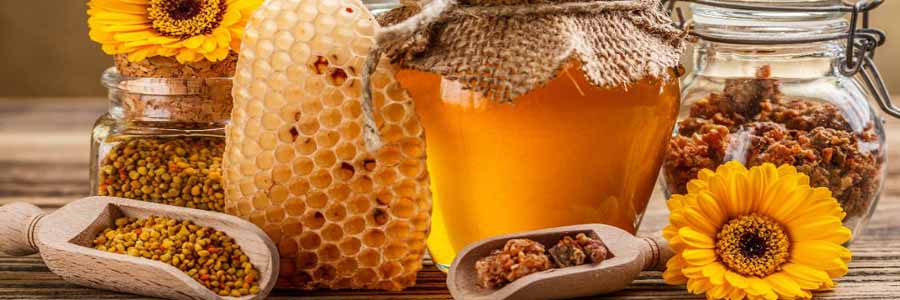
The action of bee products on the respiratory system can be attributed mainly to their antimicrobial and anti-inflammatory action.
Propolis has been used mainly in respiratory diseases as it acts as an inhibitor of the pathogenic action of many microbes and honey in synergy with propolis has been shown to be particularly effective in the treatment of chronic bronchitis.
The combination of vitamin C and carotenoids present in pollen and propolis strengthens the immune system by protecting the body from viral and microbial infections. The combination of honey with pollen, royal jelly and / or propolis has a strong anti-viral effect, especially against the flu virus.
Propolis is a powerful antimicrobial agent and its combination with honey multiplies the antimicrobial action of the two components, eliminating any risk and facilitating the assimilation of the product by the body.
Its antitussive, expectorant and sedative action is associated with its content of specific volatile components as well as its antimicrobial action.
The use of bee products in modern therapy as well as their synergistic action with each other and with other natural products opens the way for another treatment.
A treatment that targets the person and not the disease.
Tsoutsos Vassilis, pulmonologist